

How Jewellers Choose Matched Demantoid Pairs and Sets

Nine minutes on how the Ural demantoid is found, cut and valued — with geologists of the Ural Branch of the Russian Academy of Sciences and the Ural Geological Museum.
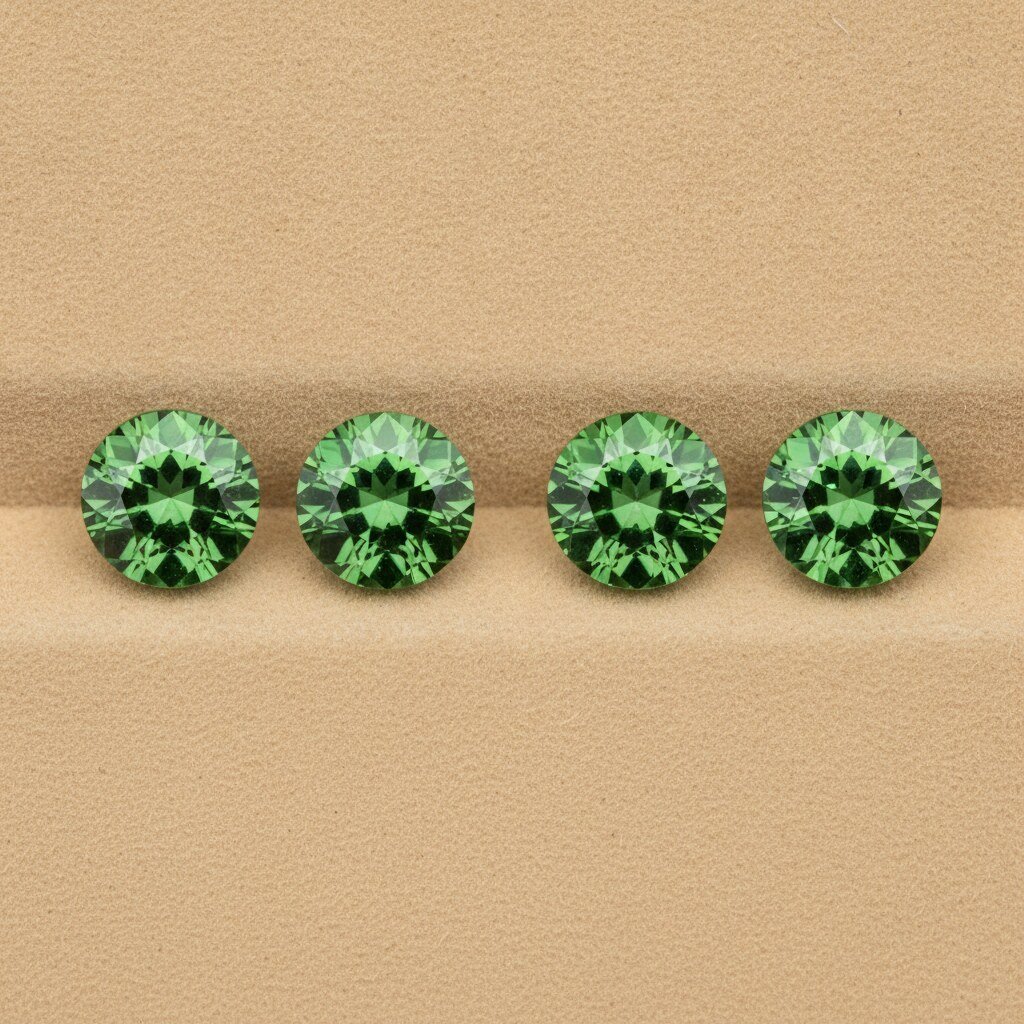
Matching natural demantoids is not a matter of finding two records with the same carat weight. A convincing pair or set must read as one design after the stones are mounted, viewed at normal distance and moved through light.
That requires judgement across dimensions, outline, color, tone, clarity, cut and brilliance. The tighter the design tolerances, the larger the inventory needed to find a natural match.
What “matched” should mean
For Demidoff, a matched group is selected so that the stones work together in a specified piece of jewellery. It does not mean that nature produced exact duplicates.
The matching hierarchy depends on the design, but usually includes:
- millimetre dimensions and face-up area;
- outline and shape;
- hue, tone and saturation;
- brightness and fire;
- cut style and apparent pattern;
- clarity and visible inclusions;
- depth and girdle requirements;
- carat weight.
Weight appears late for a reason: the wearer sees dimensions and light, not a scale reading.
Start with the jewellery brief
Before selecting stones, define:
- jewellery type;
- number of stones;
- target shape or allowed alternatives;
- exact seat or layout dimensions;
- straight or graduated arrangement;
- metal color;
- acceptable color range;
- face-up clarity preference;
- deadline and replacement tolerance;
- whether origin or documentation must be uniform.
A broad request such as “ten matching green demantoids” can produce a visually mixed result. A useful brief might instead say: “Ten rounds for a yellow-gold arc, graduated from 2.1 to 3.0 mm, medium to vivid green, lively face-up, no dark centre, no eye-visible surface-reaching fractures.”
Matching for earrings
An earring pair is usually viewed simultaneously but on opposite sides of the face. Minor differences can disappear in motion; other differences become more obvious.
Prioritise:
- similar face-up diameter or outline;
- balanced tone and saturation;
- comparable brilliance under the same light;
- similar cut pattern;
- visually balanced inclusions.
Exact carat equality is less important than apparent equality. A 0.42 ct and 0.44 ct pair may look more convincing than two 0.43 ct stones if their dimensions and light return agree.
For asymmetrical earrings, “matched” can instead mean intentionally related: the same color and cut family in deliberately different sizes.
Matching calibrated melee and pavé
Small stones reveal inconsistency as a pattern. One darker, wider or duller stone can interrupt an otherwise continuous green surface.
For calibrated work, set tolerances for:
- minimum and maximum diameter;
- depth, particularly where seats are pre-cut;
- girdle thickness;
- color window;
- cut style and table appearance;
- acceptable inclusion visibility.
GIA reporting on Namibian demantoid shows how specialised this market can be: production has included precision-cut 2–3 mm calibrated stones and tight tolerances for watch applications.[1] The same principle applies to Ural material, although limited rough and natural variation may require more flexibility or a bespoke layout.
Send the setter or CAD designer's actual tolerances, not merely a nominal size.
Matching a graduated suite
A graduated set should change size deliberately while keeping a coherent identity. Lay the stones in final order and inspect:
- whether size increments feel even;
- whether color grows darker as stones become larger;
- whether one stone breaks the brilliance rhythm;
- whether the centre stone deserves intentional emphasis;
- whether the layout remains balanced after accounting for setting gaps.
Do not grade each stone in isolation. The layout is the product.
Sometimes a slightly lighter centre stone works because its greater size makes it appear more saturated. Sometimes the opposite is true. Physical layout and video are more useful than a spreadsheet alone.
Color matching in different light
Green stones can appear different against white paper, skin, yellow gold and platinum. Compare the full group:
- in diffuse daylight;
- under neutral indoor light;
- under directional light that reveals fire;
- against the intended metal color, if known.
Keep position consistent, then swap stones within the row. This exposes whether a perceived difference comes from the gem or the illumination.
Avoid judging a pair from separately processed product photographs. The images must be made together under the same camera and lighting settings.
Clarity and horsetails in a matched group
Microscopic inclusions do not have to match exactly. Their visual effect does.
If neither stone shows inclusions face-up, different internal scenes may be irrelevant. If one earring stone contains a prominent horsetail and the other looks completely clean, the pair may feel unbalanced to a collector even when color and size match.
For pavé, consistency of transparency usually matters more than matching the type of inclusion. For a collector pair, corresponding horsetail visibility may be part of the brief.
Remember that a horsetail alone does not prove Ural origin. Read our horsetail inclusion guide.
Cut, orientation and brilliance
Two rounds of equal diameter may return light differently because of pavilion depth, table size, symmetry or polish. Compare them in motion and look for:
- similar bright and dark patterning;
- comparable fire;
- no persistent window in one stone;
- similar face-up outline;
- compatible crown height and girdle for setting.
Pairs are especially unforgiving: when one stone is livelier, the other can look dull even if it would be attractive alone.
Why matching requires inventory depth
Every added tolerance reduces the pool:
text
all stones
→ correct shape
→ correct dimensions
→ compatible color
→ compatible tone
→ compatible clarity
→ compatible cut and brilliance
→ suitable depth and girdle
For a pair, this may require examining dozens of candidates. For a large suite, matching may happen over time or begin with a parcel selected before final cutting.
The Demidoff inventory snapshot on 23 July 2026 contained 830 active single demantoids and 166 active set listings. Demidoff works with Ural demantoids from the Korkodin deposit, managing the process from extraction and sorting to in-house cutting. Matching can therefore begin at the rough, sorting or recutting stage where appropriate—not only by searching finished third-party stock.
Inventory changes, so these figures describe sourcing depth rather than a permanent availability promise.
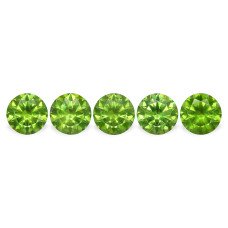
Matched pairs and sets in stock
Ready demantoid pairs and suites — matched before they reach the catalogue.
When to buy a ready set and when to commission matching
Choose a ready demantoid set when:
- the layout already suits the design;
- timing is important;
- the visual relationship is easier to approve as a complete group;
- the setting can be designed around the stones.
Request custom matching when:
- a mounting already exists;
- CAD tolerances are fixed;
- a lost stone must be replaced;
- a large graduated group is needed;
- color or inclusion requirements are unusually specific.
Replacement matching deserves realistic expectations. Natural material ages in inventory, and the original stone's exact combination may no longer be available. Good documentation of dimensions, weight, color and photographs makes future work easier.
A sourcing brief jewellers can copy
Project: Pair of drop earrings
Quantity: 2
Shape: Oval
Dimensions: 5.0 × 4.0 mm target; tolerance ±0.10 mm face-up
Depth: Please propose within setter's range
Color: Medium to vivid green; avoid overly dark tone
Clarity: Eye clean face-up; subtle horsetail acceptable
Cut: Similar outline, table and brilliance
Origin/documentation: State required level
Metal: 18k yellow gold
Deadline/destination: State date and country
For pavé or suites, attach a numbered diagram and specify which dimensions are critical.
Approving a matched selection remotely
Request:
- one group photograph on a neutral background;
- one group video in diffuse light;
- one group video in directional light;
- dimensions, depth and weight for every numbered stone;
- side views where setting depth matters;
- a layout image in final order;
- disclosure of any visible or structural concerns.
Approve the group as a group. Do not select every stone independently and expect the final arrangement to match itself.
Work with Demidoff
Browse current matched Ural demantoid sets, compare the single-stone inventory, or send a sourcing brief through Contact us. Demidoff can prepare a numbered selection for remote review, a private appointment at the Bangkok showroom or an upcoming gem show.
If you are choosing quality before defining the layout, begin with the demantoid buying guide. For budgeting and trade-offs, see demantoid value factors.
Other gems we cut
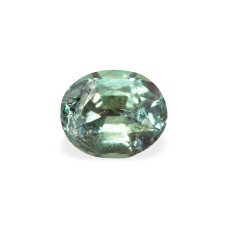
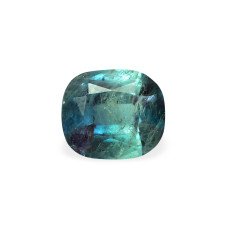
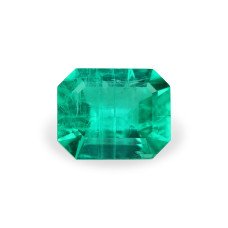
Alexandrite and emerald from other deposits — a different colour, the same standard of selection.
Source
- D. Pay, “Large Namibian Demantoid Garnet,” Gems & Gemology, Summer 2015. The report discusses precision-cut calibrated demantoid and tight tolerances for jewellery and watch applications. https://www.gia.edu/gems-gemology/summer-2015-gemnews-large-namibian-demantoid-garnet