

What Determines a Demantoid Garnet's Value?

Nine minutes on how the Ural demantoid is found, cut and valued — with geologists of the Ural Branch of the Russian Academy of Sciences and the Ural Geological Museum.
There is no honest universal price-per-carat table for demantoid. Two stones with the same weight can differ greatly in color, fire, cut, clarity, origin evidence and usefulness in a jewel. A matched pair may also be worth more than the simple sum of two unrelated stones because the matching work is itself scarce.
The practical question is therefore not “What does a demantoid cost per carat?” but “Which qualities are present in this specific stone, and how do they work together?”
The main value factors at a glance
| Factor | What generally adds value | What to examine |
|---|---|---|
| Color | Attractive, even green with suitable tone and saturation | Daylight and indoor video; zoning; darkness |
| Fire and brilliance | Strong spectral flashes and lively return | Movement under directional light |
| Size | Larger fine-quality stones are disproportionately scarce | Carat plus exact dimensions |
| Clarity | Transparency and an undisturbed face-up appearance | Eye-visible inclusions; surface-reaching features |
| Horsetails | Fine, attractive, well-positioned examples may interest collectors | Appearance, placement and independent origin evidence |
| Cut | Brightness, symmetry, polish and usable proportions | Windowing, extinction, outline, girdle |
| Origin | Documented classic origin may carry additional market significance | Basis of the claim; provenance; report if available |
| Matching | A convincing pair or suite saves substantial sourcing work | Color, size, tone, cut and apparent face-up balance |
None of these factors operates alone.
1. Color: strength without excessive darkness
Demantoid ranges from greenish yellow and yellowish green to intense green. The classic GIA study of Russian material identifies emerald green as the rarest end of the range.[1] Strong, even green is highly sought after, but a stone that is too dark can lose brilliance and fire.
Value assessment should separate:
- hue: the direction of the color;
- tone: lightness or darkness;
- saturation: strength of color;
- evenness: whether the color reads consistently face-up.
Commercial labels such as “vivid” are useful only when tied to the actual stone. Compare images made under consistent conditions and request video in neutral light. A saturated photograph is not a grading report.
2. Fire and brilliance: the reason color is not enough
Demantoid's dispersion is approximately 0.057, exceptionally high for a colored gemstone.[1] A well-cut stone can break light into strong spectral flashes. That fire is part of its identity and value.
Deep green body color may mask some dispersion; lighter stones may show it more openly. This creates a real trade-off rather than a simple hierarchy. One buyer may prefer pure green presence, another the visible “diamond-like” fire for which the gem was named.
Compare stones while moving them. Static photographs are poor evidence of brilliance. Look for light returning across the crown instead of a persistent transparent window or broad dark zones.
3. Size: rarity compounds only when quality survives
Fine demantoid is characteristically small. GIA reported that Russian demantoids were mostly below one carat and described very large faceted stones as extraordinary.[1] Larger stones can therefore command a disproportionate premium.
But weight alone does not create quality. A large stone with dark tone, weak cut or distracting fractures may be less desirable than a smaller, lively stone. Millimetre dimensions also matter: an overly deep stone may carry weight that contributes little to face-up size.
Always compare:
- carat weight;
- length, width and depth;
- visible face-up area;
- quality retained at that size.
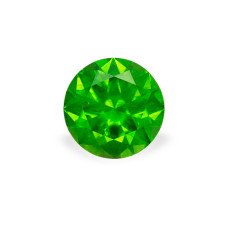
Compare stones beyond carat weight
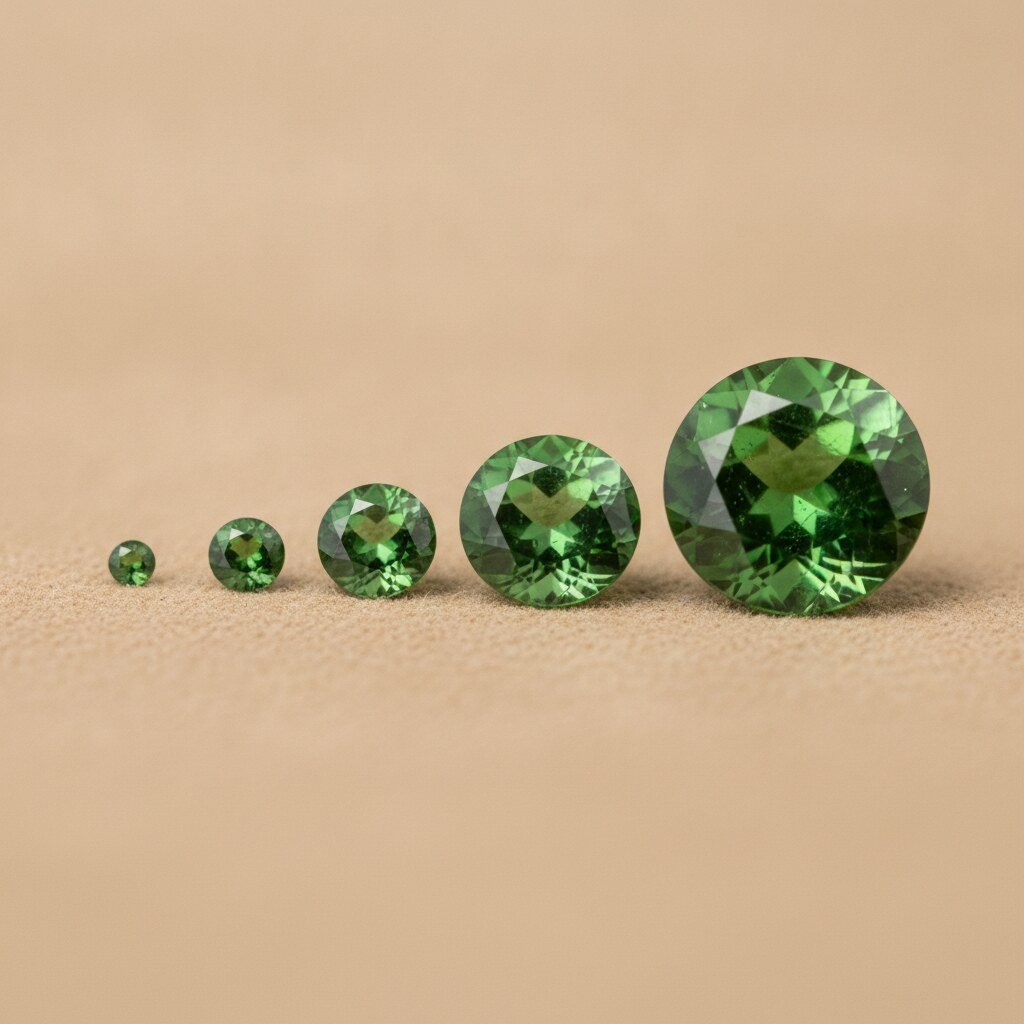
Similar weights, different colour, clarity and cut — the reason no price table survives contact with real stones.
4. Clarity: transparency, beauty and structure
The relevant question is not whether a demantoid has inclusions. Natural gems often do. The question is how those inclusions affect appearance and durability.
A small inclusion hidden near the edge may have little visual effect. A dense feature under the table may reduce transparency. A surface-reaching fracture deserves closer inspection before setting. Conversely, a delicate, well-positioned horsetail may be a positive collector feature.
Descriptions such as “eye clean,” “loupe clean” or “included” should be paired with photographs or video. Also ask at what viewing distance and under what conditions the seller applies the term.
5. Horsetails: sometimes a premium, never an automatic one
GIA describes horsetails as one of the rare internal features that can add value to a gemstone.[2] Collector appeal depends on visibility, fineness, shape and placement. A graceful radiating spray can be compelling; a dense feature that compromises transparency is a different proposition.
A horsetail must not be used as a shortcut for origin. GIA states that not all Russian demantoids have horsetails and that they also occur in material from Iran and Italy.[3] Research additionally documents related fibrous structures from Pakistan.[4]
Value the inclusion for what is actually visible, and assess origin separately. Our horsetail guide explains the distinction.
6. Cut: the multiplier buyers often underestimate
Cut determines how much of the rough's potential reaches the eye. Facet angles control brightness and fire; symmetry and polish control crispness; outline and girdle affect how easily the stone can be set.
Signs of a stronger cut include:
- balanced brightness rather than a dead centre;
- distinct flashes as the stone moves;
- a harmonious outline;
- tidy facet junctions;
- good polish;
- practical depth and girdle.
Scarce rough sometimes justifies non-standard proportions to preserve color or avoid an inclusion. The aim is not mathematical uniformity at any cost. The aim is a beautiful, structurally sensible finished gem.
7. Origin and provenance
Russian Ural demantoid is the historic material associated with nineteenth- century discovery, Fabergé-era jewellery and classic horsetail inclusions. That history and scarcity can add market significance. Other origins, including Namibia, Madagascar and Iran, can also produce beautiful demantoid.
Origin should not be inferred from color or horsetails alone. Ask what supports the locality statement:
- direct chain of custody;
- mining and cutting records;
- prior ownership documentation;
- an independent laboratory opinion, where appropriate.
Demidoff works with Ural demantoids from the Korkodin deposit, managing the process from extraction and sorting to in-house cutting, as described on About Demidoff. This is a provenance claim, not a substitute for an independent laboratory report when a buyer requires one.
8. Matching: why a pair can be more than two stones
Natural stones that match in dimensions, outline, color, tone, clarity and light return are harder to assemble than stones that meet those criteria individually. The tighter the tolerances and the larger the required group, the more inventory and sorting time the task demands.
For earrings, the eye reads both stones together. For pavé, a single darker or larger stone can interrupt the rhythm of the layout. For a suite, the match may need to graduate deliberately while retaining a unified appearance.
This explains why a coherent pair or set can carry additional value. Read our guide to matched demantoid pairs and sets.
9. Documentation and disclosure
Documentation can reduce uncertainty, but buyers should distinguish among:
- a seller's description;
- provenance records;
- an identification report;
- an origin opinion;
- treatment information.
These documents do not necessarily answer the same questions. Ask what is available for the particular stone before purchase. This guide deliberately does not state that every Demidoff stone has a report or that all demantoid is untreated; those points require stone-specific confirmation.
Why two equal-weight demantoids can have different prices
Imagine two 0.70 ct stones. The first is lively medium green, well cut and transparent, with documented Ural provenance. The second is darker, faces up smaller and has a central fracture. Their weights match, but their beauty, rarity, usefulness and level of certainty do not.
Now imagine that the first has a near-identical partner suitable for earrings. The pair solves a sourcing problem that either stone alone does not. That relationship is also part of value.
This is why price-per-carat can be a comparison aid only after the stones are already comparable.
Is demantoid an investment?
Demantoid can be rare, historic and valuable, but those qualities do not guarantee appreciation or liquidity. Buy it for gem quality, provenance, design suitability and personal or collection relevance—not on an unsupported promise of financial return.
How to request a meaningful quotation
Send:
- intended use;
- preferred shape;
- target dimensions or carat range;
- color preference;
- clarity or horsetail preference;
- single, pair or set requirement;
- documentation requirements;
- timing and delivery destination.
Demidoff can then select genuinely comparable options rather than reply with a misleading generic range. Browse all Ural demantoids, review single stones and sets, or contact us for a current selection.
Other gems we cut
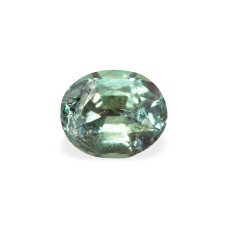
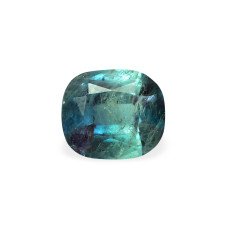
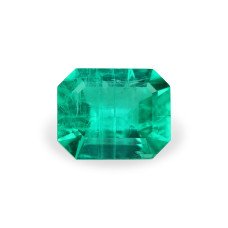
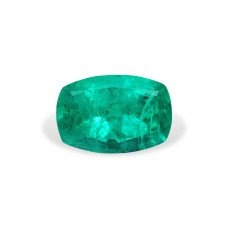
Alexandrite and emerald from other deposits — a different colour, the same standard of selection.
Sources
- W. R. Phillips and A. S. Talantsev, “Russian Demantoid, Czar of the Garnet Family,” Gems & Gemology, Summer 1996. https://www.gia.edu/dam/migrated-assets/docs/doc1/Russian-Demantoid-Czar-of-the-Garnet-Family.pdf
- GIA, “Garnet Gemstone.” https://www.gia.edu/garnet
- GIA, “Does a horsetail inclusion in demantoid guarantee Russian origin?” https://www.gia.edu/gia-faq-garnet-horsetail-inclusion
- U. Hennebois et al., “Faceted Demantoid Garnet with Spectacular ‘Horsetail’ Inclusions,” Gems & Gemology, Winter 2021. https://www.gia.edu/gems-gemology/winter-2021-microworld-faceted-demantoid-garnet-horsetail-inclusions