

Russian Demantoid Garnet: Ural Origin vs Namibia, Madagascar and Iran
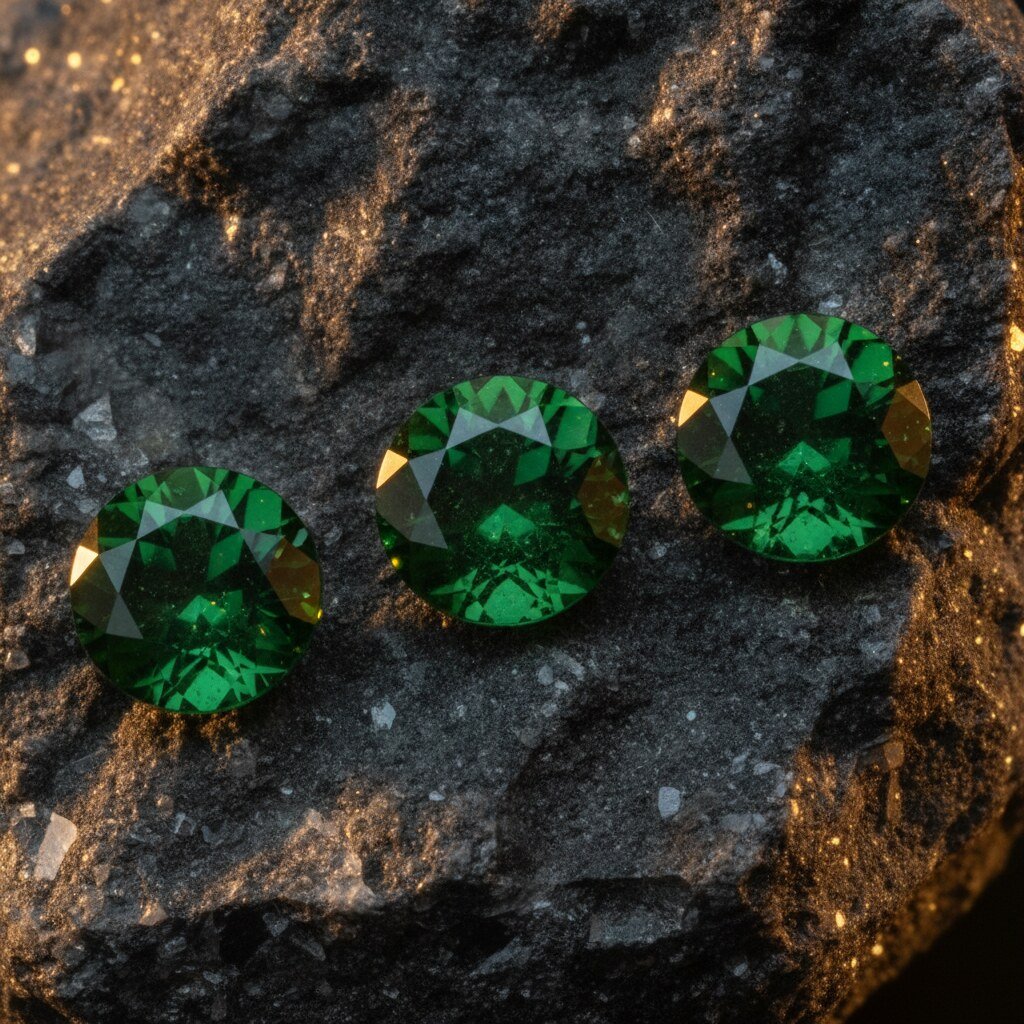

Nine minutes on how the Ural demantoid is found, cut and valued — with geologists of the Ural Branch of the Russian Academy of Sciences and the Ural Geological Museum.
Demantoid was first made famous by material from Russia's Ural Mountains, but it is not exclusively Russian. Important deposits have since been found in Namibia, Madagascar, Iran, Italy, Pakistan and elsewhere.
Origin can matter to history, collecting, geology and price. It does not, however, replace an assessment of the individual stone. Every major source can produce variation, and color or a single inclusion is not a dependable passport.
Comparison at a glance
| Source | Geological setting | Broadly reported features | Important caution |
|---|---|---|---|
| Russian Urals | Serpentinite-hosted | Historic source; rich green to yellowish green; strong fire; some stones have classic horsetails | Not every Ural stone has a horsetail |
| Namibia | Skarn-related | Often lighter colors with conspicuous dispersion; strong production in calibrated and melee sizes | Exceptional larger and intense-green stones also exist |
| Madagascar | Skarn-related | Wide color range; fluid inclusions, fractures and mineral inclusions reported | “No horsetail” does not identify Madagascar by itself |
| Kerman, Iran | Serpentinite-hosted | Yellowish to deep green; chromium and iron influence color; acicular inclusions may occur | Horsetails or deep green do not prove Russian origin |
These are source-level patterns, not a remote identification key.
Two broad geological families
GIA groups demantoid-bearing deposits into two broad settings.[1]
Serpentinite-hosted demantoid forms in altered ultramafic rocks. Classic examples include the Russian Urals and Kerman in Iran, as well as sources in Italy and Pakistan.
Skarn-related demantoid forms where magmatic fluids interact with calcium-rich rocks. Namibia and Madagascar are major examples.
This geological distinction helps explain differences in associated minerals, trace chemistry and inclusion suites. It also explains why superficially similar gems may require advanced testing to separate by origin.
Russian Ural demantoid
The Urals are the historic home of demantoid. The gem was discovered there in the nineteenth century and became closely associated with Russian jewellery and Fabergé. GIA describes Russian material from yellowish or brownish green through golden green to rare emerald green, with chromium contributing the valued green color and iron contributing yellow.[2]
Ural demantoid is celebrated for:
- its place in jewellery history;
- strong lustre and dispersion;
- fine green colors across a natural range;
- the classic horsetail found in some stones;
- scarcity in fine larger sizes.
But three common shortcuts are wrong:
- not every Russian demantoid is vivid green;
- not every Russian demantoid contains a horsetail;
- not every demantoid with a horsetail is Russian.[3]
Demidoff works with Ural demantoids from the Korkodin deposit, managing the process from extraction and sorting to in-house cutting. This direct operating chain—rather than an attempt to identify origin from appearance alone—is the basis of the company's provenance statement. The full process and mine photographs belong on About Demidoff, not repeated here.
Namibian demantoid
Namibian demantoid entered the market in the 1990s. GIA reporting on the Green Dragon mine describes a range from slightly bluish green and “lemongrass” green to greenish yellow and other andradite colors, with much production suited to small calibrated stones.[4]
The combination of lighter color and high dispersion can make Namibian material especially lively. Precision-cut melee is important for luxury jewellery and watch applications. Although larger stones are uncommon, GIA has documented exceptional examples, including an 11.63 ct intense vibrant green round.[4] A source stereotype must never be used to dismiss an individual gem.
GIA states that classic horsetails have not been observed in Namibia in the same way as in Russia, Iran or Italy.[3] That absence is useful context, not a complete origin test.
Madagascar demantoid
The Antetezambato deposit in northern Madagascar is skarn-related. GIA's detailed study reports a wide color range and internal features including fluid inclusions, fractures, wollastonite needles or channels, and diopside aggregates. The studied material was close to pure andradite, with negligible chromium and vanadium; iron was considered the main color-causing element.[5]
Recent GIA field reporting describes sought-after rich “jungle” and fresh minty greens with strong fire, alongside less desired brown or yellow tones.[6] As with every origin, the useful conclusion is variation—not a single uniform look.
Madagascar can produce substantial rough pockets, yet fine faceted stones over one carat remain unusual in the broader demantoid market.[6] Classic horsetails are not reported as a feature of Madagascar material by GIA.[3]
Iranian demantoid
Iran has both skarn and serpentinite-related occurrences. Material from Kerman Province is particularly relevant to origin discussions because its geology resembles the serpentinite-hosted family that includes the Urals.
A 2022 mineralogical study describes Kerman demantoid as transparent to semi-transparent, from yellowish green to deep green, with chromium and iron contributing to color. The samples commonly contained acicular chrysotile inclusions, and chemical data allowed separation from other studied localities.[7]
This is why the statement “horsetail equals Russian” is unsafe. Iranian material can show visually related inclusions and attractive green color. Origin determination may require chemistry, spectroscopy and an experienced laboratory—not a loupe rule.
Can origin be determined by sight?
Usually not with sufficient confidence for an important commercial claim. Experienced dealers and gemologists may recognise patterns, but overlap is real.
Potential evidence includes:
- trace-element chemistry;
- spectroscopy;
- microscopic inclusion assemblages;
- geological and reference-sample comparison;
- mine-to-market provenance;
- an independent laboratory origin opinion.
These forms of evidence answer different questions. Direct provenance records where a stone travelled; a laboratory opinion evaluates measurable properties against reference data. Buyers should decide what level of certainty their purchase requires.
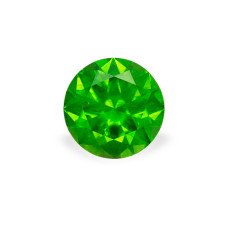
Explore Korkodin demantoids
Ural stones from the deposit this guide describes — varied colours and sizes, all in stock.
Does Ural origin automatically mean better quality?
No. Ural origin can add historical and collector significance, but each stone still has to earn its place through color, fire, cut, clarity and suitability for the intended jewel.
A fine Namibian, Madagascar or Iranian demantoid can be more beautiful than a commercial-quality Ural stone. Conversely, an exceptional Korkodin demantoid can unite strong gem quality with historic origin and direct provenance. Origin is a value factor, not a substitute for looking.
Questions to ask a seller
- What exact origin is being stated?
- Is the claim based on direct provenance, a laboratory opinion, or both?
- Can I see the supporting document or chain of custody?
- Are the report and the stone clearly linked by weight, dimensions and image?
- Is the description distinguishing origin from treatment disclosure?
- Can I compare the stone in more than one lighting condition?
For a complete quality assessment, use our demantoid buying guide. For the inclusion question, see what horsetails reveal.
Why buyers choose Korkodin demantoid
Korkodin material offers a combination that is difficult to reduce to one grading term: Ural history, direct mine-to-cut provenance, varied natural green colors, high dispersion and access to a deep inventory of singles and matched groups.
Browse the Demidoff Ural collection or contact us with your target dimensions, color and documentation requirements. We can arrange remote comparison, a Bangkok showroom viewing or a meeting at an upcoming gem show.
Other gems we cut
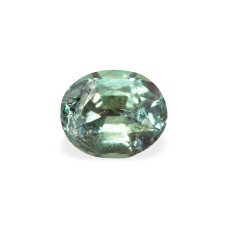
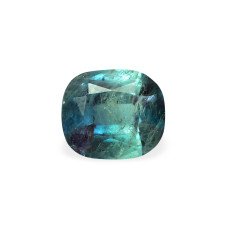
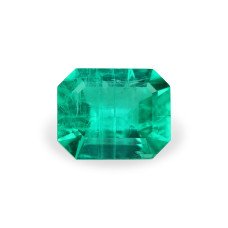
Alexandrite and emerald from other deposits — a different colour, the same standard of selection.
Sources
- GIA, “Gems Formed in Metamorphic Rocks,” Gems & Gemology, Summer 2023. https://www.gia.edu/gems-gemology/summer-2023-colored-stones-unearthed0
- W. R. Phillips and A. S. Talantsev, “Russian Demantoid, Czar of the Garnet Family,” Gems & Gemology, Summer 1996. https://www.gia.edu/dam/migrated-assets/docs/doc1/Russian-Demantoid-Czar-of-the-Garnet-Family.pdf
- GIA, “Does a horsetail inclusion in demantoid guarantee Russian origin?” https://www.gia.edu/gia-faq-garnet-horsetail-inclusion
- D. Pay, “Large Namibian Demantoid Garnet,” Gems & Gemology, Summer 2015. https://www.gia.edu/gems-gemology/summer-2015-gemnews-large-namibian-demantoid-garnet
- F. Pezzotta, I. Adamo and V. Diella, “Demantoid and Topazolite from Antetezambato, Northern Madagascar,” Gems & Gemology, Spring 2011. https://www.gia.edu/gems-gemology/spring-2011-demantoid-topazolite-antetezambato-pezzotta
- GIA, “Field Gemology: Demantoid Garnets from Northern Madagascar.” https://www.gia.edu/gia-news-research/field-gemology-sapphire-demantoid-garnet-northern-madagascar
- V. Ahadnejad, M. S. Krzemnicki and A. M. Hirt, “Demantoid from Kerman Province, South-east Iran,” The Journal of Gemmology 38(4), 2022. https://edoc.unibas.ch/entities/publication/09eb9e21-929a-4beb-bf62-834394bc2d7d