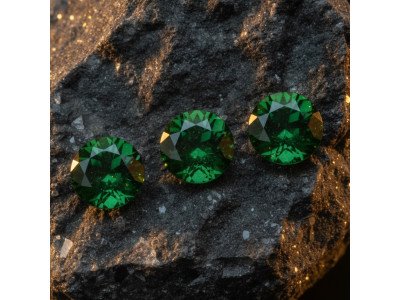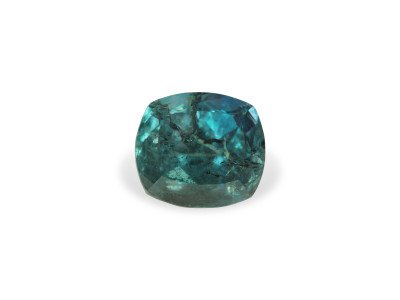

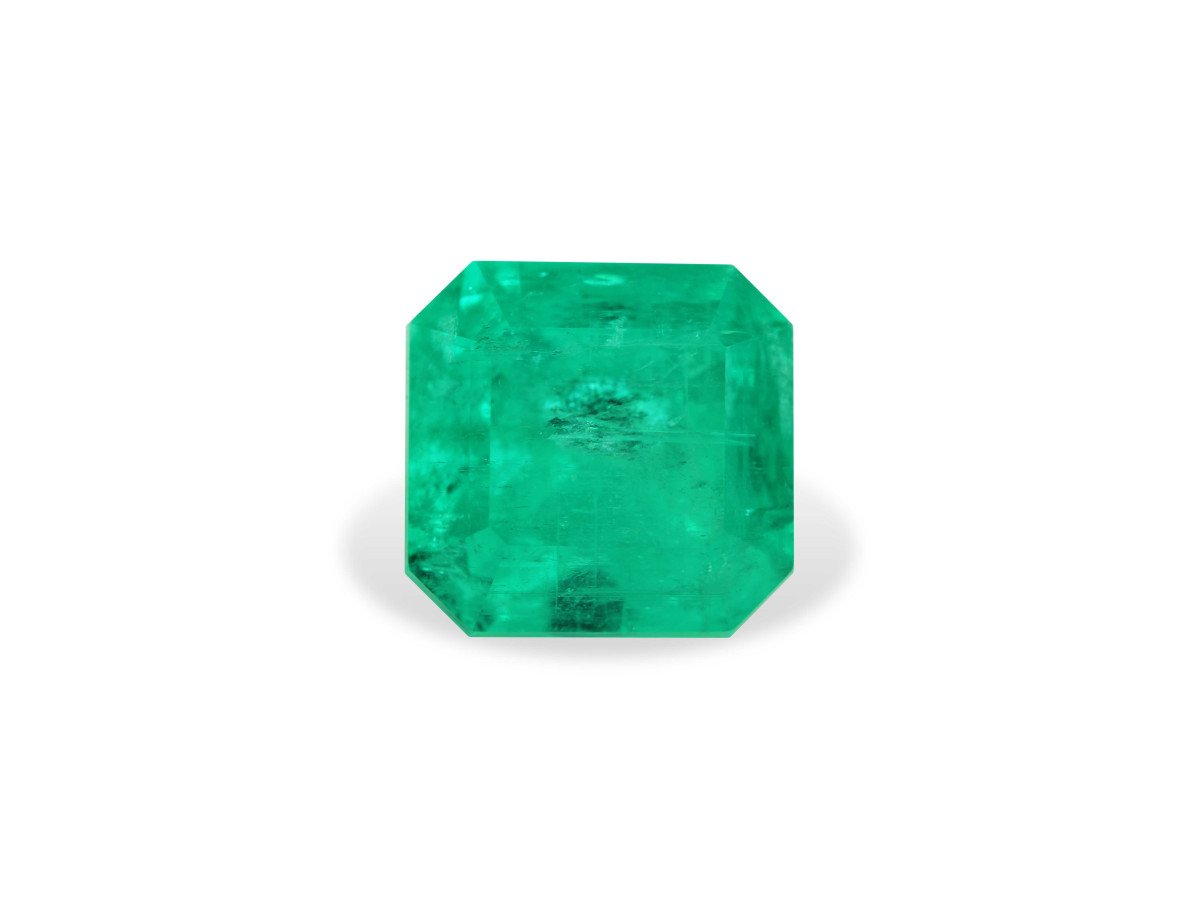
Ask for an emerald and you will be shown Colombia, Zambia or Brazil. The Urals are the quiet fourth answer — the same Russian ground that gave the world alexandrite, and a green you can tell apart. This guide explains what a Russian emerald is, how it differs from the more common sources, and how to judge one before buying.
Where a figure appears below, it comes from our own current stock of Ural emerald.
Where Russian emerald comes from
Russia's emeralds are found on the eastern side of the Ural Mountains, in the belt long known as the Ural Emerald Mines near Malysheva, north-east of Yekaterinburg. The deposit was discovered in 1831 and worked through the nineteenth and twentieth centuries; it is the only significant emerald source in Russia and one of the few in the world set in mica schist rather than the sedimentary and hydrothermal settings of South America and Africa.
That geology is not trivia. The rock an emerald grows in shapes its colour and its inclusions, which is why an experienced eye can often place a stone by its character. It is also the same geological story behind Russia's other two signature stones — alexandrite was first found in these very emerald workings, and demantoid nearby in the Urals.
Ural, Colombian and Zambian emerald: how they differ
Colombian emerald is the market's reference point: a warm, pure green, often slightly bluish, grown in hydrothermal veins. Its inclusions are typically the "jardin" of the trade — three-phase inclusions that laboratories read as a Colombian signature. It is also the most expensive origin, and the name most often misapplied.
Zambian emerald comes from mica schist, like the Urals, and tends toward a cooler, sometimes bluish-green, usually darker and often cleaner than Colombian material. It has taken a large share of the market over the past two decades.
Ural emerald also forms in mica schist and leans cooler and more yellowish-green than Colombian stone. In our own stock the largest colour group is a yellowish green, followed by a medium green — the grassy, slightly warm-cool tone the Urals are known for, rather than the deep blue-green of top Zambian goods. It is not better or worse than the others; it is a different, recognisable character, and it is Russian.
Can origin be proved?
Origin is a claim, and for emerald it is a claim worth testing, because it moves the price. A gemmological laboratory that issues country-of-origin reports states its conclusion with the reasoning behind it, read from inclusions, spectra and trace elements. For a stone where provenance matters, that report is the document to ask for — we walk through how to read one, line by line, in the guide to reading a gemstone report.
The wider point: a seller's word is not provenance. "Russian emerald" should be supported by a report or by a chain you can trace back to the ground, not by a label on a parcel.
How to judge a Russian emerald
Colour first. With emerald, colour carries most of the value — tone and saturation more than a single word like "green". A lively medium green with good saturation outranks a pale or an over-dark stone of the same size. Judge it in daylight and again under warm light; emerald can shift.
Clarity in context. Emerald is an included stone by nature — a flawless emerald is a reason for suspicion, not delight. What matters is whether the inclusions sit where they do not threaten the stone or dull its colour. Most trade emerald is clarity-enhanced with oil or resin; ask what a stone has had done to it, because that too affects value and care.
Cut and shape. The step-cut octagon — the "emerald cut" — dominates for a reason: it suits the crystal shape and shows colour cleanly. In our stock it is by far the most common cut, with cushions, princesses and ovals alongside. A well-cut stone returns colour evenly across the face without dark or washed-out zones.
Size. Most Ural emerald reaches the market small; in our own stock the median stone is about 2 ct, with the range running from under half a carat to over 20 ct. Large clean stones with strong colour are the exception at any origin, and they do not stay long.
What we hold now
We currently stock 133 loose Ural emeralds — 120 single stones and 13 matched sets — from about 0.4 to over 20 ct, each photographed with its own colour, clarity, cut and measurements. Stock moves, so the catalogue is the accurate picture:
- The full Ural emerald collection — single stones and sets, filterable by colour, clarity, shape and weight.
- Single emeralds and matched sets for earrings and jewellery layouts.
- How to read a gemstone report — what a laboratory establishes about a stone, and how to check it.
Looking for a particular colour, size or matched pair? Tell us what you need and we will say plainly whether it is in stock, on the bench, or not something we can promise. We also show at international gem shows through the year, where the stones can be seen in person.